Watch Party — building shared experiences
A full-stack exploration of video libraries, shared viewing, and the systems behind real-time applications.

A shared experience, several moving parts
Watch Party explores watching video together. The repository brings a Next.js frontend and a Django backend into one workspace, with PostgreSQL for persistent data and Redis-backed workers for asynchronous work.
The engineering problem
A viewing interface is only one part of the experience. Video metadata, library management, background processing, and session state must fit together. Keeping the API, worker, and interface responsibilities clear makes failures easier to investigate.
What the repository shows
The documented stack includes Django REST Framework, Django Channels, Celery, TypeScript, and Next.js. Separate frontend and backend directories make those boundaries visible. Setup instructions describe PostgreSQL and Redis as explicit dependencies.
A useful trade-off
A split frontend and backend allows each side to evolve independently, but introduces configuration and deployment work. API origins, worker connectivity, and environment-specific settings need as much attention as the screen itself.
Archived interface
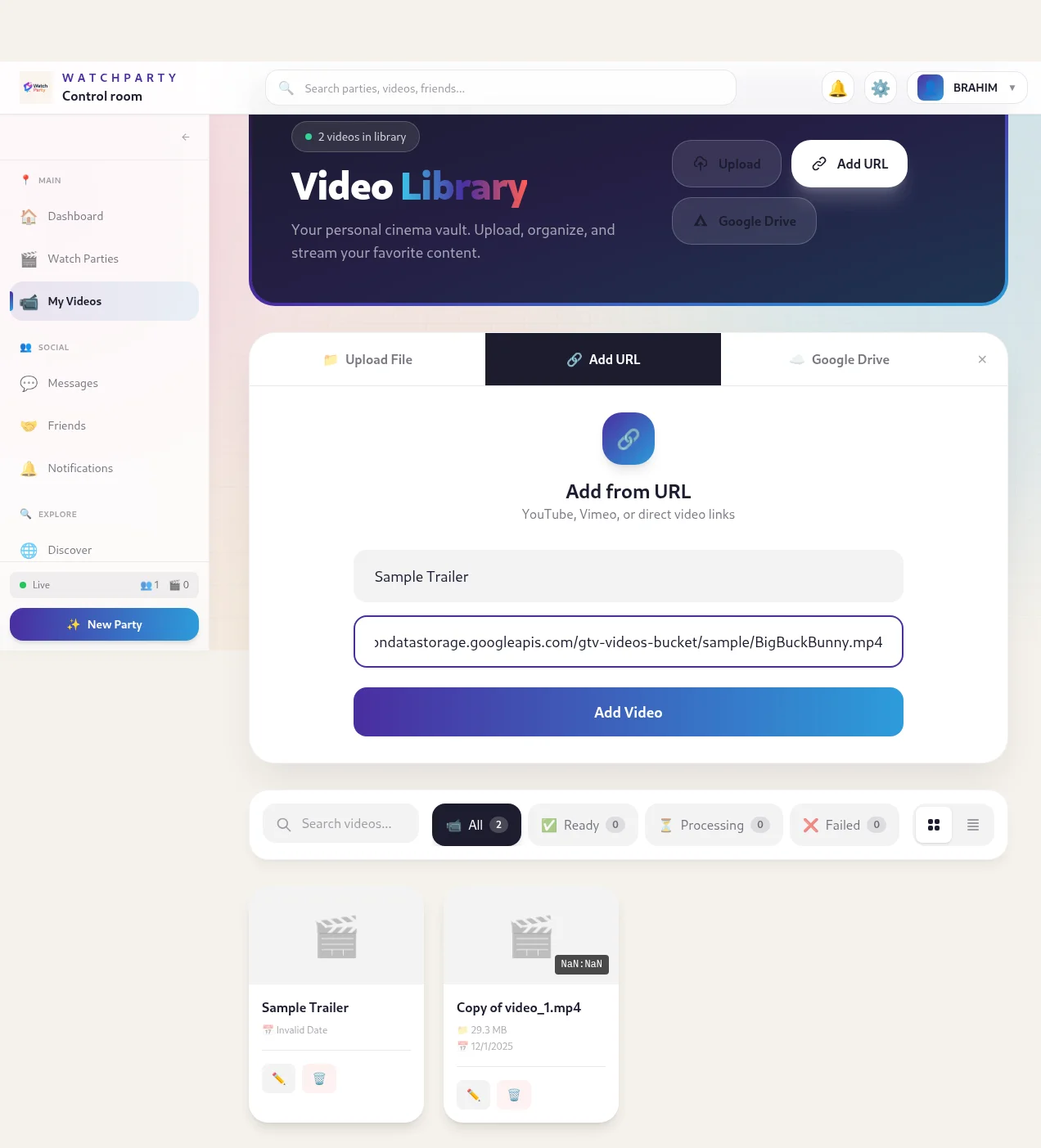
Development screenshot preserved in the public repository. It shows an unfinished library interface, including placeholder metadata; it is not a current production screenshot.
Evidence and scope
This is a repository-based case study, not a claim about current uptime, audience size, or measured synchronization latency. The illustration is a conceptual cover. See the source and setup notes for the implementation and its evolving deployment guidance.